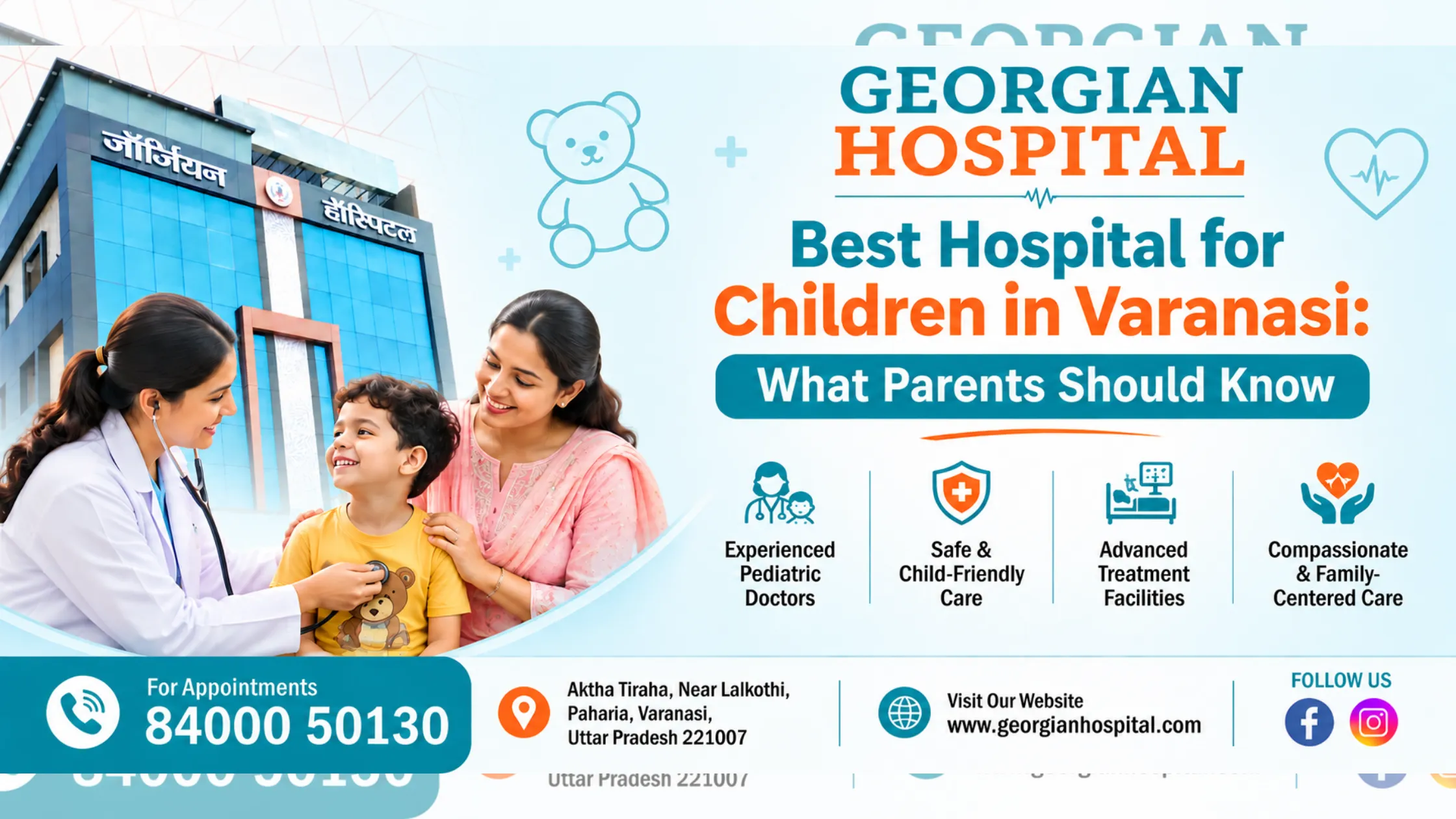
Best Hospital for Children in Varanasi: What Should Parents Look For?
This article is for general health awareness and educational purposes only. It does not replace professional medical advice, diagnosis, or treatment. Parents should consult a qualified healthcare professional regarding their child’s health concerns.
Quick Answer: How Should Parents Choose a Hospital for Children in Varanasi?
Parents should look for a hospital with qualified medical professionals, clean facilities, appropriate diagnostic support, 24×7 emergency availability, and clear communication with families. The right choice depends on the child’s age, the nature of the health concern, and the services each facility provides.
Introduction: Why Choosing the Right Healthcare for Your Child Matters
Every parent knows the worry of seeing a child fall ill. Whether it is a persistent fever, a sudden injury, or a health concern that has been building over time, the question of where to go for the right care can feel overwhelming — especially in a city like Varanasi, where healthcare options range from local clinics to multispeciality hospitals.
Choosing appropriate healthcare for children is not just about proximity. It is about finding a place where your child will receive medically sound assessment, age-appropriate care, and clear communication with the family.
This guide explains what parents should consider when evaluating hospitals and child specialists in Varanasi — so that when the time comes, the decision is informed rather than rushed.
What Should Parents Look for in a Children’s Hospital?
1. Qualified Medical Professionals
The most important factor is whether the hospital has doctors who are qualified to assess and treat children. A paediatrician — a specialist in children’s medicine — is the appropriate first point of contact for most childhood health concerns. For surgical or other specialist needs, a multispeciality hospital with relevant departments is an advantage.
Always confirm the qualifications and registration of any doctor you consult. In India, doctors are registered under the National Medical Commission (NMC) or State Medical Councils.
2. Cleanliness and Infection Control
Children, particularly infants and young children, are more vulnerable to hospital-acquired infections. Look for a facility that maintains visibly clean and hygienic surroundings, follows hand-hygiene protocols, and has clear policies on visiting and infection control.
3. Diagnostic Support
Accurate diagnosis depends on having the right investigations available. A hospital with on-site diagnostic facilities — blood tests, X-ray, ultrasound — reduces delays and allows doctors to assess children more efficiently, particularly in an emergency.
4. Emergency and Round-the-Clock Availability
Children’s health can change quickly. A hospital that provides 24×7 emergency access and has experience managing acute medical situations in children provides parents with an important safety net — especially at night or on weekends.
5. Clear Communication with Parents
A good healthcare team explains what is happening, what tests are being done, and why. Parents should feel comfortable asking questions, and doctors should take the time to answer them. If you leave a consultation with unanswered questions, that is worth noting.
6. Transparent Information
Reliable hospitals provide clear information about services, consultation schedules, fees, and what to expect from a visit. Avoid facilities that make vague or exaggerated claims about treatment outcomes.
Common Health Problems in Children
The World Health Organization (WHO) and the Indian Academy of Pediatrics (IAP) recognise several health concerns that commonly affect children in India:
- Fever and infections — often caused by viral or bacterial illnesses, particularly in young children whose immune systems are still developing.
- Cough, cold, and respiratory problems — upper respiratory tract infections are among the most frequent reasons parents consult a doctor.
- Diarrhoea and vomiting — gastroenteritis is a common cause of illness in children and can lead to dehydration if not managed promptly.
- Dehydration — particularly in infants and toddlers during illness or in hot weather.
- Allergies — including skin rashes, allergic rhinitis, and food allergies.
- Nutritional deficiencies — anaemia and vitamin deficiencies remain significant concerns for children in Uttar Pradesh, as noted by the National Health Mission (NHM).
- Digestive problems — including constipation and abdominal pain.
- Routine health check-ups and vaccinations — the IAP National Immunization Schedule outlines the vaccinations recommended for children from birth through adolescence. Keeping these up to date is one of the most important steps parents can take for their child’s health.
When Should Parents Consult a Doctor?
Medical evaluation is advisable when a child has:
- Fever lasting more than two to three days, or any fever in a baby under three months of age.
- Persistent vomiting or diarrhoea, or signs that the child is not drinking fluids.
- A cough that is worsening, lasting more than two weeks, or associated with breathing difficulty.
- Noticeable weight loss or poor weight gain over time.
- Unusual behaviour, excessive crying, or persistent irritability.
- Symptoms that are not improving as expected.
When in doubt, consulting a qualified paediatrician is always the right choice.
Warning Signs Parents Should Never Ignore
The following symptoms in a child require urgent medical attention. Do not wait to book a routine appointment if your child has any of these:
- Difficulty breathing — fast, laboured, or noisy breathing.
- Seizures or convulsions — including febrile convulsions.
- Unusual drowsiness or difficulty waking — a child who is unusually limp or unresponsive.
- Signs of severe dehydration — no urine for many hours, dry mouth, sunken eyes, no tears when crying.
- Blue or grey lips, tongue, or fingertips — this may indicate low oxygen and requires immediate assessment.
- Severe or worsening rash, particularly if accompanied by fever.
- Serious injuries — head injuries, suspected fractures, or significant bleeding.
- Fever in a baby younger than three months — this always requires prompt medical review.
If your child has any of these warning signs, seek emergency medical care immediately. Do not delay while monitoring at home.
How to Choose a Children’s Hospital in Varanasi
When evaluating your options, consider:
- Whether the hospital has a paediatrics department or a consulting paediatrician.
- Whether it provides 24×7 emergency services.
- The range of diagnostic facilities available on site.
- Whether the hospital is reachable from your home, particularly in an emergency.
- Whether your child’s health insurance or TPA is accepted.
- Feedback from other families in your area — word of mouth from people you trust remains a reliable guide.
There is no single “best” hospital that is right for every child and every situation. The right choice depends on your child’s specific health needs and the services a particular facility can provide.
Questions Parents Should Ask Before or During a Hospital Visit
- Is there a qualified paediatrician available, and what are their consultation hours?
- What diagnostic tests can be done on site, and how quickly are results available?
- Does the hospital provide emergency care for children round the clock?
- What is the process if my child needs specialist referral or admission?
- Does the hospital accept cashless insurance or TPA, and what documentation is required?
Meet Dr. Rishab Jaiswal – Paediatrician and Neonatologist in Varanasi
Dr. Rishab Jaiswal is a medical professional specialising in Paediatrics and Neonatology. His professional background includes experience in paediatric emergency medicine, neonatal intensive care, paediatric intensive care, and the management of newborn and childhood health conditions.
Educational Qualifications
- MBBS – Mahatma Jyotiba Phule Rohilkhand University, Bareilly (2012–2017).
- MD Paediatrics – Atal Bihari Vajpayee Medical University (2022–2025).
- Clinical Fellowship in Neonatology – KIMS, Hyderabad (2026).
- Postgraduate Program in Pediatric Nutrition (PGPN) – Boston University, USA (2024).
Professional Experience
His CV lists professional experience at:
- AIIMS, New Delhi – Paediatrics Emergency.
- ABVIMS and Dr. Ram Manohar Lohia Hospital, New Delhi – Resident, PICU.
- Popular Group of Hospitals – Consultant Paediatrician and Neonatologist.
- Meridian Hospital, Varanasi – Consultant Paediatrician and Neonatologist.
- Mata Care Maternity & Child Hospital – Junior Consultant.
Certifications
- Pediatric Advanced Life Support (PALS).
- Neonatal Resuscitation Program (NRP).
Areas of Professional Interest
- Neonatology.
- Paediatric Nephrology.
His professional background reflects training and experience in newborn care and paediatric medicine. Parents should consult a qualified doctor for individual assessment and treatment recommendations.
Children’s Healthcare at Georgian Hospital, Varanasi
Georgian Hospital, located at Aktha Tiraha, Near Lalkothi, Paharia, Varanasi – 221007, is a multispeciality hospital offering a range of medical and surgical services for patients of all ages. The hospital includes a Paediatrics department as one of its core specialties, along with general medicine, emergency care, and diagnostic support.
Georgian Hospital operates 24×7 for emergency care and routine consultations. Parents seeking medical assessment for their child can contact the hospital directly to confirm available services, consultation schedules, and appointment options.
📞 +91 84000 50130 | 🌐 Georgian Hopital in Varanasi
Please contact the hospital directly to confirm specific paediatric services and doctor availability before your visit.
Conclusion
Choosing the right hospital for your child is one of the most important decisions a parent can make. Look for qualified doctors, clean facilities, diagnostic support, emergency availability, and a team that communicates clearly with families.
For general childhood illnesses, routine check-ups, and vaccination guidance, a qualified paediatrician is your first point of contact. For urgent symptoms — breathing difficulty, seizures, severe dehydration — seek emergency care without delay.
If you are in Paharia, Varanasi, or surrounding areas and need medical guidance for your child, Georgian Hospital is available 24×7. Call +91 84000 50130 or visit georgianhospital.com to book a consultation.
Stay Connected with Georgian Hospital
Stay informed about children’s health and other healthcare topics by following Georgian Hospital on social media:
📘 Facebook — Health awareness updates and parenting tips
📸 Instagram — Child health tips and hospital updates
▶️ YouTube — Expert videos on paediatrics, emergency care, and family health
📞 +91 84000 50130
Share this article with parents in your circle who may find it helpful.
References: World Health Organization (WHO) — child health guidelines; Indian Academy of Pediatrics (IAP) — National Immunization Schedule; National Health Mission (NHM) — child nutrition reports for Uttar Pradesh; NHS — advice on when to seek medical attention for children.
FAQ Section
- How do I choose the best hospital for children in Varanasi?
Look for a hospital with a qualified paediatrician, 24×7 emergency care, on-site diagnostic facilities, clean surroundings, and clear communication with parents. The right hospital depends on your child’s specific health needs. Ask other families you trust for their experience, and confirm service availability before visiting. - What should parents check before choosing a child specialist?
Confirm that the doctor holds a recognised medical qualification in paediatrics and is registered with the NMC or State Medical Council. Check consultation availability, the hospital’s emergency facilities, and whether the facility maintains appropriate hygiene standards. A good doctor explains clearly and welcomes parents’ questions. - When should a child with fever visit a doctor?
Consult a doctor if your child has a fever lasting more than two to three days, if the child is very young (under three months, any fever requires prompt review), if the fever is very high, or if the child is unusually unwell, not drinking fluids, or developing new symptoms. Do not give fever medication without medical advice for young infants. - When does a child need emergency medical attention?
Seek emergency care immediately for difficulty breathing, seizures, severe dehydration, blue or grey lips, unusual unresponsiveness, serious injury, high fever in an infant under three months, or any symptom that is rapidly worsening. These situations should not wait for a routine appointment. - How often should children have routine health check-ups?
The Indian Academy of Pediatrics recommends regular health check-ups from birth, following a schedule that includes growth monitoring, developmental assessment, and vaccination. During infancy, visits may be monthly or more frequent; as children grow, the frequency changes. Your paediatrician will guide you on the appropriate schedule for your child. - Why are vaccination and growth monitoring important?
Vaccinations protect children from serious preventable illnesses. The IAP National Immunization Schedule outlines recommended vaccines from birth through adolescence. Growth monitoring helps doctors identify nutritional concerns, developmental delays, or health conditions early, when they are most manageable. - Should parents visit a hospital for persistent cough or vomiting?
Yes, if cough has lasted more than two weeks, is worsening, or is associated with breathing difficulty. For vomiting, consult a doctor if the child cannot keep fluids down, shows signs of dehydration, or if vomiting is severe or accompanied by abdominal pain, blood, or high fever. Persistent symptoms always warrant medical evaluation. - What information should parents carry during a child’s hospital visit?
Bring the child’s vaccination record, any previous medical reports or prescriptions, a list of any medicines the child is currently taking (including dose and frequency), details of any known allergies, and your health insurance or TPA card if applicable. Having this information ready helps the doctor assess your child more efficiently.