Food Poisoning During Monsoon: Symptoms, Causes, Prevention & When to See a Doctor
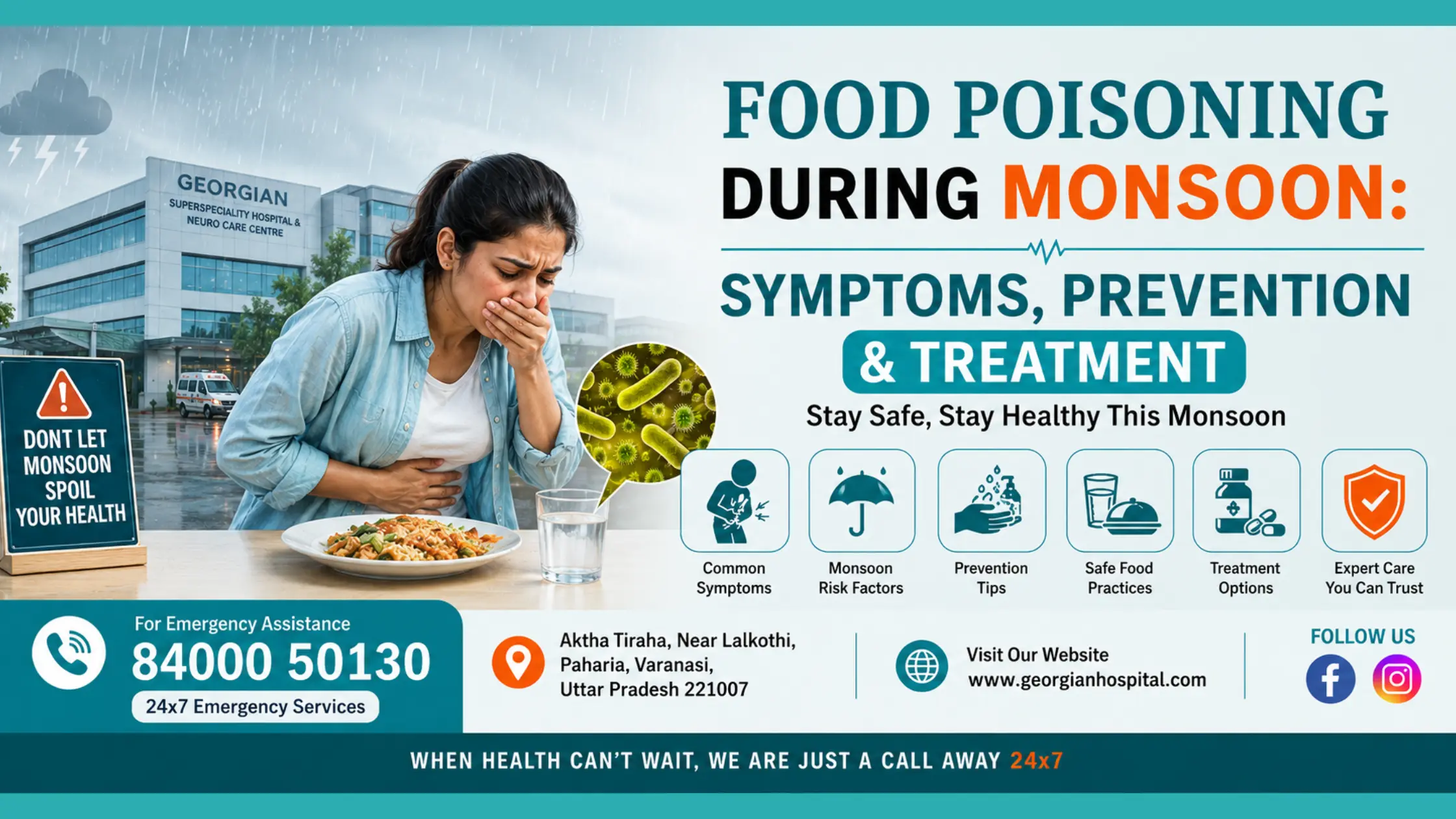
The monsoon season brings relief from the summer heat, but it also increases the risk of foodborne illnesses. High humidity, contaminated water, and improper food storage create ideal conditions for bacteria, viruses, and parasites to multiply. As a result, cases of food poisoning and stomach infections rise significantly during the rainy season.
Food poisoning can affect anyone, but children, older adults, pregnant women, and people with weakened immunity are at a higher risk of developing serious complications. While many cases resolve with proper hydration and rest, severe infections can lead to dehydration, electrolyte imbalance, and hospitalization if left untreated.
If you or a loved one experiences persistent vomiting, diarrhea, severe stomach pain, or signs of dehydration, seeking timely medical attention is important. Georgian Hospital, Paharia, recognized as one of the best hospitals in Varanasi, offers 24×7 emergency care and specialized gastroenterology services to diagnose and treat food poisoning and other digestive disorders.
What is Food Poisoning?
Food poisoning is a common illness caused by eating or drinking contaminated food or water. Harmful bacteria, viruses, parasites, or toxins enter the digestive system and cause infection, leading to symptoms such as nausea, vomiting, diarrhea, stomach cramps, and fever.
The illness can develop within a few hours or several days after consuming contaminated food, depending on the type of microorganism responsible. Although most people recover within a few days, severe infections require prompt medical treatment to prevent complications.
Why Does Food Poisoning Increase During Monsoon?
The rainy season creates the perfect environment for harmful microorganisms to grow rapidly. Increased moisture, poor sanitation, and contaminated water sources make food more susceptible to bacterial contamination.
Some of the major reasons include:
High Humidity
Warm and humid weather allows bacteria to multiply quickly, especially in cooked food that is left outside for long periods.
Contaminated Drinking Water
Heavy rainfall can contaminate water supplies with sewage and harmful microorganisms. Drinking untreated water significantly increases the risk of stomach infections and food poisoning.
Improper Food Storage
Food spoils faster during humid weather. If cooked meals are not refrigerated properly or are consumed after long periods, harmful bacteria can multiply rapidly.
Street Food During Monsoon
Roadside food is often exposed to contaminated water, dust, flies, and poor hygiene practices. Eating uncovered or improperly cooked food increases the chances of foodborne illnesses.
Poor Hand Hygiene
Not washing hands before eating or preparing food can transfer harmful germs to meals, increasing the likelihood of infection.
Common Causes of Food Poisoning
Food poisoning is often preventable with proper food handling and hygiene. Some of the most common causes include:
- Drinking contaminated or untreated water
- Eating stale or improperly stored food
- Consuming undercooked meat, eggs, or seafood
- Eating unwashed fruits and vegetables
- Spoiled milk and dairy products
- Cross-contamination between raw and cooked food
- Poor personal hygiene during food preparation
- Eating uncovered food exposed to flies and insects
- Improper refrigeration of leftovers
Being mindful of food safety practices can significantly reduce the risk of infection during the rainy season.
Common Symptoms of Food Poisoning
Symptoms can vary depending on the cause and severity of the infection. While some people experience mild digestive discomfort, others may develop serious complications requiring hospitalization.
Watch out for the following symptoms:
- Nausea and vomiting
- Frequent loose stools (diarrhea)
- Severe stomach cramps
- Abdominal pain
- Fever and chills
- Weakness and fatigue
- Loss of appetite
- Bloating
- Headache
- Dehydration
- Blood in stool (in severe cases)
If symptoms persist for more than 24–48 hours or become severe, consult a doctor immediately.
Who Is More at Risk?
Although food poisoning can affect anyone, certain groups are more vulnerable to severe illness and complications.
These include:
- Children below five years of age
- Older adults
- Pregnant women
- People with diabetes
- Patients suffering from liver or kidney diseases
- Individuals with weakened immunity
- Cancer patients receiving chemotherapy
These individuals should seek medical advice promptly if they develop symptoms of food poisoning.
Why Timely Treatment Matters
Ignoring food poisoning can lead to complications such as severe dehydration, electrolyte imbalance, kidney problems, bloodstream infections, and prolonged gastrointestinal illness. Early diagnosis and appropriate treatment help prevent these complications and support a faster recovery.
At Georgian Hospital, Paharia, patients receive comprehensive evaluation and treatment for food poisoning, stomach infections, dehydration, and other digestive conditions. With experienced gastro specialists, advanced diagnostic facilities, modern pathology services, and 24×7 emergency care, the hospital provides timely medical support for patients of all age groups.
Recognized as one of the best hospitals in Varanasi, Georgian Hospital combines compassionate care with advanced medical technology to ensure safe and effective treatment. Patients from Paharia, Sarnath, Pandeypur, Bhojubir, Shivpur, Cantt, Ashapur, Chaukaghat, and nearby districts across Eastern Uttar Pradesh trust Georgian Hospital for quality healthcare and expert gastroenterology services.
In Part 2, we’ll discuss diagnosis, treatment options, home care tips, foods to eat and avoid, preventive measures, when to visit a hospital, FAQs, and expert guidance from Georgian Hospital’s Gastroenterology Department.
Diagnosis & Treatment of Food Poisoning
If symptoms of food poisoning are mild, they often improve within a couple of days with adequate rest and hydration. However, persistent or severe symptoms require medical evaluation. At Georgian Hospital, doctors carefully assess each patient’s condition to determine the underlying cause and recommend the most appropriate treatment.
Depending on the severity of the illness, diagnosis may include:
- Physical examination and medical history
- Blood tests to check for infection and dehydration
- Stool examination to identify bacteria, viruses, or parasites
- Electrolyte assessment in patients with severe vomiting or diarrhea
- Additional investigations if complications are suspected
Treatment varies according to the cause and severity of the infection. Mild cases usually require oral rehydration solutions (ORS), adequate fluid intake, and dietary modifications. More severe cases may require intravenous (IV) fluids, medications to control symptoms, or hospitalization for close monitoring.
Home Care Tips for Mild Food Poisoning
If symptoms are mild, these measures can support recovery:
- Drink plenty of water, ORS, coconut water, or clear soups to prevent dehydration.
- Take adequate rest and avoid strenuous activities.
- Eat small, light meals once vomiting has stopped.
- Avoid oily, spicy, and processed foods until you recover.
- Wash your hands frequently to prevent spreading infection.
- Do not take antibiotics or anti-diarrheal medicines without consulting a doctor.
If symptoms worsen despite home care, seek immediate medical attention.
Foods to Eat & Foods to Avoid
Foods to Eat
Choose foods that are easy to digest and help restore energy.
- Plain rice
- Khichdi
- Bananas
- Applesauce
- Toast
- Boiled potatoes
- Curd (if tolerated)
- Clear vegetable or chicken soup
- Coconut water
- ORS and plenty of fluids
Foods to Avoid
Avoid foods that may irritate your digestive system.
- Spicy foods
- Oily and fried foods
- Street food
- Raw salads from unhygienic sources
- Unpasteurized dairy products
- Alcohol
- Soft drinks
- Excess tea and coffee
How to Prevent Food Poisoning During Monsoon
Preventing food poisoning is often easier than treating it. Following simple hygiene practices can significantly reduce your risk.
- Always drink filtered, boiled, or purified water.
- Wash fruits and vegetables thoroughly before eating.
- Eat freshly cooked food whenever possible.
- Avoid stale or uncovered food.
- Refrigerate leftovers promptly.
- Wash your hands before preparing or eating food.
- Keep raw and cooked foods separate.
- Avoid eating from unhygienic roadside stalls, especially during the rainy season.
- Ensure meat, eggs, and seafood are cooked thoroughly.
- Maintain cleanliness in your kitchen and food preparation areas.
These precautions can help protect your family from foodborne illnesses during the monsoon.
When Should You Visit a Hospital?
While many cases of food poisoning improve with proper hydration and rest, certain symptoms should never be ignored.
Seek immediate medical attention if you experience:
- Persistent vomiting that prevents drinking fluids
- Diarrhea lasting more than 48 hours
- Blood in stool
- High fever
- Severe abdominal pain
- Signs of dehydration such as dizziness, confusion, dry mouth, or reduced urine output
- Symptoms in young children, elderly individuals, or pregnant women
Prompt treatment can prevent serious complications and support faster recovery.
Why Choose Georgian Hospital for Food Poisoning Treatment in Varanasi?
When it comes to digestive health and emergency medical care, choosing the right hospital makes all the difference.
Georgian Hospital, Paharia is recognized as one of the best hospitals in Varanasi, providing comprehensive medical care for food poisoning, stomach infections, dehydration, and other gastrointestinal conditions. The hospital combines experienced specialists, modern infrastructure, and patient-centered care to ensure timely diagnosis and effective treatment.
Why Patients Trust Georgian Hospital
- Experienced Gastroenterologists led by Dr. Gopal Sharan Singh
- 24×7 Emergency & Critical Care Services
- Advanced Diagnostic Laboratory & Pathology
- Modern ICU and Inpatient Facilities
- Endoscopy, Colonoscopy & Advanced Gastro Care
- Cashless TPA & Ayushman Bharat Support
- Pharmacy, Imaging, and Laboratory Services Under One Roof
Conveniently located at Aktha Tiraha, Near Lalkothi, Paharia, Georgian Hospital serves patients from Sarnath, Pandeypur, Bhojubir, Shivpur, Cantt, Ashapur, Chaukaghat, Lahartara, and nearby districts including Jaunpur, Ghazipur, Chandauli, Mirzapur, Bhadohi, Ballia, and Mau.
Frequently Asked Questions (FAQs)
1. What are the first signs of food poisoning?
Common early symptoms include nausea, vomiting, diarrhea, stomach cramps, abdominal pain, fever, and weakness. Symptoms can appear within a few hours after consuming contaminated food or water.
2. Why is food poisoning more common during the monsoon?
The warm and humid weather during the rainy season promotes the growth of bacteria and other harmful microorganisms. Contaminated water and improper food storage also increase the risk.
3. How long does food poisoning usually last?
Most mild cases improve within 24–72 hours with proper hydration and rest. However, severe infections may require medical treatment and a longer recovery period.
4. Can food poisoning become serious?
Yes. If left untreated, food poisoning can lead to dehydration, electrolyte imbalance, kidney complications, bloodstream infections, and other serious health problems.
5. When should I consult a doctor for food poisoning?
Consult a doctor if symptoms last longer than two days, you have persistent vomiting, blood in the stool, severe abdominal pain, high fever, or signs of dehydration.
6. Can children and elderly people develop severe food poisoning?
Yes. Children, older adults, pregnant women, and individuals with weakened immunity are at higher risk of developing complications and should receive prompt medical attention.
7. Does Georgian Hospital provide treatment for food poisoning?
Yes. Georgian Hospital offers comprehensive diagnosis and treatment for food poisoning, stomach infections, dehydration, and other digestive disorders with 24×7 emergency care and specialized gastroenterology services.
8. Who is the gastro specialist at Georgian Hospital?
The Gastroenterology Department is led by Dr. Gopal Sharan Singh, an experienced Gastroenterologist and Hepatologist specializing in digestive and liver diseases.
Stay Connected with Georgian Hospital
Your health matters every season. Stay informed with expert guidance from the specialists at Georgian Hospital.
📱 Follow us on Instagram and Facebook for digestive health tips, monsoon wellness advice, patient awareness campaigns, hospital updates, and expert healthcare information.
▶️ Subscribe to our YouTube Channel to watch educational videos by Dr. Gopal Sharan Singh and other specialists on food poisoning, digestive disorders, liver health, endoscopy, preventive healthcare, and healthy lifestyle practices.
📞 For appointments and enquiries, call: 8400050130.
If you’re looking for the Best Hospital in Varanasi for emergency medical care or specialized gastroenterology services, Georgian Hospital, Paharia is committed to providing advanced, compassionate, and affordable healthcare for you and your family.