24×7 Emergency Care in Varanasi — What You Need to Know Before a Crisis Hits
When Every Minute Counts
Medical emergencies don’t announce themselves. A sudden chest pain in the middle of the night. A road accident on the way back from the ghats. A child running a dangerously high fever. A stroke that begins with a simple headache.
In moments like these, the most important decision a family makes — often within seconds — is choosing where to go.
The difference between a hospital that is truly prepared for emergencies and one that is not can determine the outcome entirely. That is why understanding emergency care services in Varanasi, and knowing where to find reliable help, is something every family in the city should think about before an emergency actually happens.
This guide walks you through everything you need to know — what constitutes a medical emergency, what quality emergency care looks like, what you can expect when you arrive at the hospital, and how to prepare your family so that panic does not lead to poor decisions.
What Is Emergency Medical Care — and Why It Is Different
Emergency medical care is a specialized field focused on the rapid stabilization and treatment of patients facing life-threatening or potentially serious conditions. It is not simply fast treatment — it requires a completely different infrastructure, skill set, and mindset compared to routine OPD care.
A fully equipped emergency care setup typically includes:
- A dedicated emergency reception with round-the-clock staffing
- Immediate triage capability (assessing severity the moment a patient arrives)
- Access to imaging and diagnostics without delay — X-ray, ECG, ultrasound
- A functioning ICU with ventilator support
- Specialists available on call for neurology, orthopedics, cardiology, and general surgery
- A trained trauma team for accident and injury cases
Without all of these elements working together, critical time is lost. And in emergency medicine, time lost is often irreversible.
Signs That Require Immediate Medical Attention
Many people in Varanasi, particularly in older generations, have a habit of “waiting to see” if symptoms improve on their own. This tendency, while understandable, can turn a manageable emergency into a fatal one.
The following symptoms always require immediate emergency care — do not delay:
Neurological emergencies:
- Sudden weakness or numbness in the face, arm, or leg — especially on one side
- Sudden severe headache with no known cause (“the worst headache of my life”)
- Loss of consciousness, seizures, or confusion
- Sudden difficulty speaking, understanding, or seeing
Cardiac emergencies:
- Chest pain, pressure, or tightness — with or without arm or jaw pain
- Shortness of breath, especially at rest or with minimal exertion
- Palpitations with dizziness or fainting
Trauma and injury:
- Road accidents, falls from height, or crush injuries
- Deep wounds with heavy bleeding
- Suspected fractures or spinal injuries
- Head injuries, even if the person appears conscious
Other red flags:
- High fever with altered consciousness or neck stiffness
- Diabetic emergencies — extreme blood sugar fluctuation
- Severe abdominal pain
- Difficulty breathing or choking in children or adults
- Allergic reactions with throat swelling
If any of these are present, call for help immediately and head to the nearest 24×7 emergency hospital in Varanasi without waiting.
Common Medical Emergencies Treated at Hospitals
Understanding what gets treated in an emergency department helps families make informed decisions about when to visit a GP versus when to go directly to a full emergency setup.
Emergency departments typically handle:
- Stroke and brain emergencies — requiring immediate imaging and specialist response
- Heart attacks (Acute Myocardial Infarction) — requiring ECG, monitoring, and cardiological intervention
- Road accidents and trauma — requiring surgical assessment, stabilization, and often ICU admission
- Respiratory distress — severe asthma, breathlessness, lung infections
- Severe infections — sepsis, meningitis, high-grade fever with complications
- Fractures and orthopaedic injuries
- Pediatric emergencies — febrile convulsions, dehydration, breathing difficulty in children
- Poisoning or overdose
- Obstetric emergencies — pregnancy-related complications requiring immediate care
Each of these conditions requires a different combination of specialists, equipment, and response protocols — which is why the multispeciality structure of a hospital directly determines the quality of emergency care it can deliver.
Why Choosing the Right Emergency Hospital in Varanasi Matters
Not every hospital with an “Emergency” sign is equipped for every situation. In a city like Varanasi — which sees high traffic, a large elderly population, significant road accident rates, and growing chronic disease burden — the quality of emergency infrastructure across different facilities varies significantly.
When choosing an emergency hospital in Varanasi, consider:
Availability: Is it truly 24×7, with doctors physically present — not just on call?
Specialist access: If your emergency turns into a neurosurgery case at 3 AM, is that surgeon reachable and ready?
ICU capacity: Does the hospital have functional ICU beds with ventilator support, not just beds listed on paper?
Diagnostics speed: Can they run an ECG, do an ultrasound, and review a CT scan in the first 30 minutes?
Insurance support: Are they empanelled for cashless treatment so your family doesn’t lose critical time arranging payments?
These are practical questions — and the answers vary hospital by hospital. Families in Paharia, Sarnath, Varanasi Cantonment, and surrounding areas should identify a trusted emergency hospital in advance, before a crisis forces an uninformed decision.
The Role of ICU and Critical Care in Emergency Treatment
Many patients who survive serious emergencies owe their recovery not just to the initial treatment they received in the emergency room, but to the quality of ICU care that followed.
An Intensive Care Unit (ICU) is where critically ill patients are continuously monitored. For patients who have suffered a stroke, a heart attack, a serious accident, or major surgery, the ICU is where recovery is most vulnerable — and most dependent on trained care.
A well-functioning ICU includes:
- Continuous vital monitoring (heart rate, blood pressure, oxygen levels)
- Ventilator support for patients unable to breathe independently
- 24-hour nursing care with trained critical care protocols
- Specialist review multiple times a day
- Infection control to protect immunocompromised patients
- Stepdown facilities for patients moving from critical to stable
When evaluating an ICU hospital in Varanasi, ask about staffing ratios, ventilator availability, and specialist oversight — not just bed count.
Trauma and Accident Care — A Growing Need in Varanasi
Road accidents remain one of the leading causes of emergency admissions across Indian cities — and Varanasi is no exception. The combination of high traffic density, a large number of two-wheelers, and narrow inner-city lanes creates real risk.
Quality trauma care requires:
- Immediate stabilization on arrival — airway, breathing, circulation
- Rapid imaging — X-ray, CT scan — to identify internal injuries
- Orthopaedic and surgical teams ready for fracture fixation, internal bleeding, or organ damage
- Blood availability for trauma hemorrhage
- ICU admission protocols for serious head or spinal injuries
Trauma care is time-critical. A hospital with proper accident and trauma care in Varanasi can make the difference between temporary disability and permanent damage — or between survival and loss.
Emergency Care at Georgian Hospital, Paharia — What to Expect
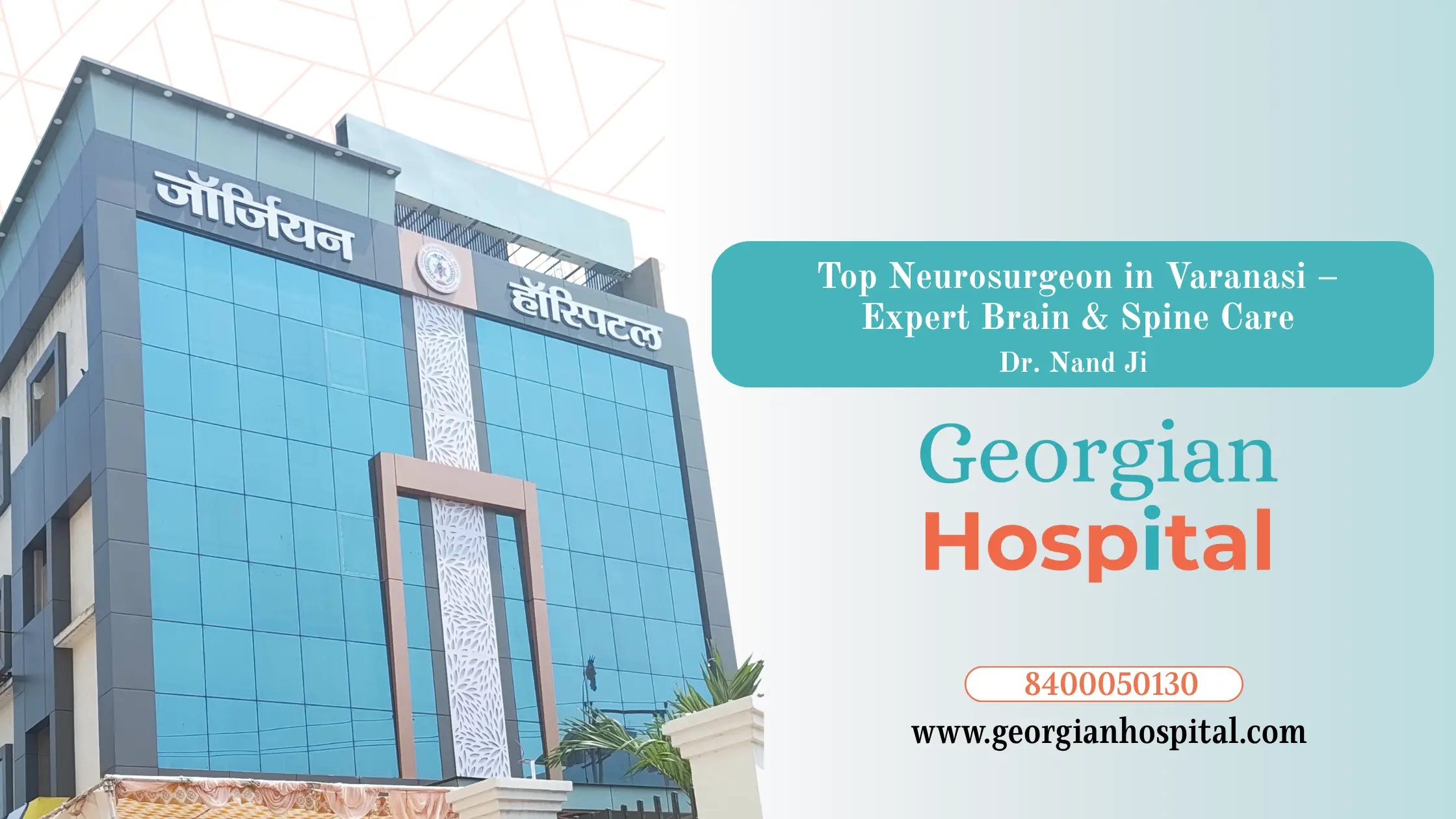
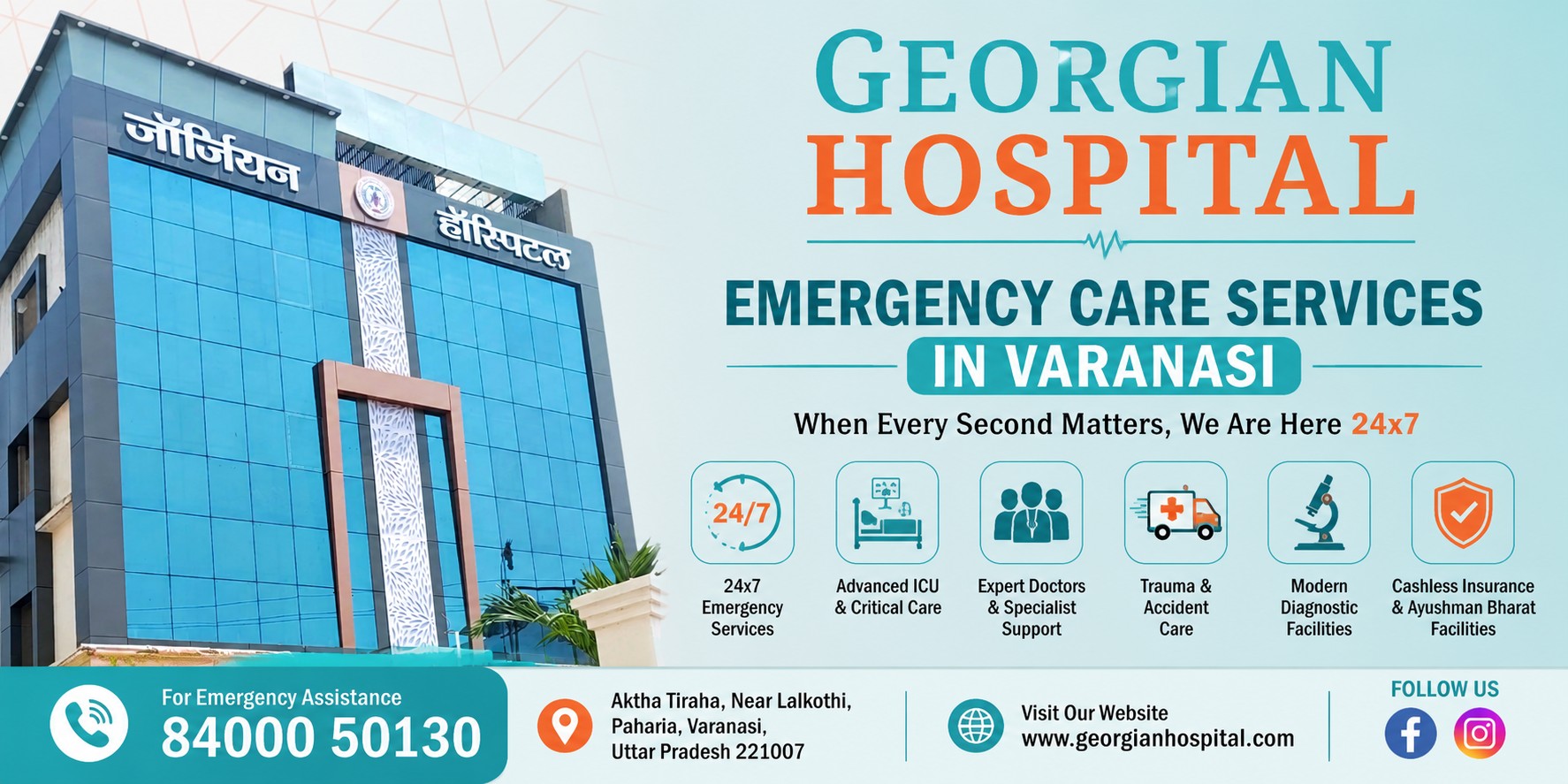
Georgian Hospital, located in Paharia, Varanasi, is set up for genuine emergency responsiveness — not just as a listed service but as an operational reality.
Here is what patients and families can expect:
24×7 Emergency Services
The emergency department at Georgian Hospital operates around the clock, every day of the year. Patients arriving at any hour — including nights, weekends, and public holidays — are received by attending medical staff immediately.
Advanced ICU and Critical Care
Georgian Hospital maintains an ICU unit with ventilator support and continuous monitoring capabilities. Critical care patients — whether post-surgery, post-stroke, or following trauma — receive round-the-clock specialist oversight.
Experienced Emergency and Specialist Doctors
The hospital’s medical team includes specialists across Neurosurgery, Gastroenterology, Orthopedics, Cardiology, and Pulmonology — meaning that when an emergency requires specialist involvement, patients do not have to be transferred to another facility. The right doctor is reachable within the same hospital.
Key specialists include:
- Dr. Nand Ji Singh — Neurosurgeon (Brain & Spine)
- Dr. Ajeet Singh — Orthopedic Surgeon
- Dr. Gopal Sharan Singh — Gastroenterologist & Liver Specialist
Modern Diagnostic Facilities
On-site diagnostic support includes X-ray, ultrasound, ECG, EEG, and clinical pathology — enabling rapid assessment without delays caused by outsourcing tests.
Trauma and Accident Management
Georgian Hospital is equipped to manage road accident cases, fractures, head injuries, and trauma presentations with both emergency stabilization and surgical intervention where required.
Cashless Insurance and TPA Support
Georgian Hospital works with a wide network of insurance companies and Third-Party Administrators (TPAs), including:
MD India TPA, VOLO TPA, Ericsson TPA, SBI GIC, Manipal Cigna Health Insurance, Star Health, Galaxy Health, Aditya Birla Health, HDFC ERGO, Navi, Magma GIC, Acko GIC, IFFCO Tokio GIC, and others.
Cashless treatment eligibility is verified quickly so that families do not face financial stress during a medical crisis.
Ayushman Bharat and ABHA Card Support
Georgian Hospital is empanelled under Ayushman Bharat – Pradhan Mantri Jan Arogya Yojana (PMJAY). Eligible beneficiaries can avail cashless emergency treatment without upfront payment, subject to scheme guidelines.
Patients with an ABHA card (Ayushman Bharat Health Account) can also benefit from digital continuity of care — their health records are accessible across empanelled hospitals, reducing the time lost in reconstructing medical history during emergencies.
If you are unsure about your eligibility, the hospital’s front desk team can assist with verification.
Emergency Preparedness Tips for Families in Varanasi
One of the most practical things any family can do is prepare before an emergency — not in the middle of one. Here are actionable steps:
Keep emergency contacts accessible:
- Save the nearest 24×7 emergency hospital number in every family member’s phone
- Georgian Hospital: +91 84000 50130
- National Emergency: 112
Maintain a family medical file:
- List all current medications and dosages
- Note known allergies (medication, food, anaesthesia)
- Keep copies of recent reports — ECG, blood tests, scans
- If a family member has a chronic condition (diabetes, hypertension, heart disease), note it clearly
Know your insurance details:
- Keep your health insurance card, policy number, and TPA contact handy
- If Ayushman Bharat beneficiary, keep PMJAY card accessible
- Know whether your hospital is empanelled before an emergency, not during one
Identify your hospital in advance:
- Choose a reliable emergency hospital in Varanasi near you — one that is genuinely equipped, not just listed
- If you live in Paharia, Sarnath, or nearby areas, Georgian Hospital’s location on Akatha Tiraha makes it easily accessible
Don’t wait too long:
- Many families delay calling for help hoping the situation improves. For neurological and cardiac events especially, every 15–30 minutes of delay can have permanent consequences.
Georgian Hospital’s Location — Convenient Emergency Access for Varanasi Residents
Georgian Hospital is situated at Akatha Tiraha, near Lalkothi, Paharia, Varanasi – 221007, making it accessible from multiple directions in the city.
For residents of Paharia, Sarnath, Varanasi Cantonment, Sigra, and surrounding localities, Georgian Hospital is among the most conveniently accessible emergency hospitals in Varanasi. With 24×7 functioning and no dependency on pre-scheduling, patients can arrive at any time and receive immediate triage.
Frequently Asked Questions (FAQ)
Q1: Which hospital in Varanasi offers 24×7 emergency care?
Georgian Hospital in Paharia operates a fully functional 24×7 emergency unit with doctors present round the clock. Several hospitals in Varanasi offer emergency services, but it is important to verify actual staffing, ICU availability, and specialist access before choosing one.
Q2: Does Georgian Hospital have ICU facilities?
Yes. Georgian Hospital has an ICU with ventilator support and continuous monitoring for critically ill patients. The ICU team coordinates with specialists across departments for comprehensive critical care.
Q3: What should I do first in a medical emergency in Varanasi?
Call ahead to the hospital if possible while heading there — this allows the team to prepare. For life-threatening emergencies like stroke, heart attack, or serious trauma, do not wait — leave immediately. Georgian Hospital’s emergency number is +91 84000 50130.
Q4: Is Georgian Hospital empanelled under Ayushman Bharat?
Yes. Georgian Hospital is empanelled under the Ayushman Bharat PMJAY scheme. Eligible beneficiaries can avail cashless treatment for covered procedures and conditions. Bring your PMJAY card or ABHA card and the team will assist with eligibility verification.
Q5: Can I use health insurance for emergency treatment at Georgian Hospital?
Yes. Georgian Hospital works with multiple insurance providers and TPAs including Star Health, HDFC ERGO, Aditya Birla Health, Manipal Cigna, Acko, and many others. Cashless claims can be processed for empanelled insurers.
Q6: What types of emergencies are treated at Georgian Hospital?
The hospital handles a wide range of emergencies — neurological (stroke, seizures, head injuries), orthopedic (fractures, trauma), cardiac, respiratory, gastroenterological, pediatric, and general surgical emergencies. With specialists available across departments, most critical cases can be managed without transfer.
Q7: How do I know if my condition is an emergency?
If you are experiencing chest pain, sudden neurological symptoms (weakness, confusion, speech difficulty), difficulty breathing, uncontrolled bleeding, high fever with unconsciousness, or any injury from a significant accident — go to an emergency hospital immediately. When in doubt, it is always safer to get assessed.
Q8: Where is Georgian Hospital located in Varanasi?
Georgian Hospital is located at Akatha Tiraha, Near Lalkothi, Paharia, Varanasi – 221007. It is easily accessible from Paharia, Sarnath, Cantonment, and nearby areas.
Don’t Wait for an Emergency to Find the Right Hospital
Here is the honest truth: most families think about which hospital to trust only after an emergency has already happened. That moment — with a patient in pain, family members in panic, and the clock running — is the worst time to make an important decision.
The best thing you can do for your family today is to be prepared.
Know which hospital near you has genuine 24×7 emergency services. Know whether they have the ICU capacity, the specialist availability, and the insurance support that a serious situation demands. Keep the number saved. Talk to your family about it.
If you live in Paharia, Sarnath, or anywhere in the Varanasi region, Georgian Hospital is here — not just as a listed emergency facility, but as a team that is genuinely ready.
Because when it matters most, being ready is everything.
📞 Georgian Hospital Emergency Contact
Address: Akatha Tiraha, Near Lalkothi, Paharia, Varanasi – 221007
Phone: +91 84000 50130
Website: https://georgianhospital.com/
Available: 24×7, 365 days a year
Stay Connected with Georgian Hospital
Health awareness doesn’t stop at the hospital door. Follow Georgian Hospital on social media for:
- Emergency preparedness tips for families
- Health camp announcements and free consultation drives
- Seasonal health alerts (dengue, viral fever, winter cardiac risks)
- Expert advice from our specialist doctors
- Patient education on managing chronic conditions
- Hospital announcements and new service updates
📘 Follow us on Facebook: [https://www.facebook.com/georgianhospitalvns]
📸 Follow us on Instagram: [https://www.instagram.com/georgianhospitalvns]
“Stay connected with Georgian Hospital on Facebook and Instagram for expert health tips, emergency awareness updates, health camp announcements, and important healthcare information for your family.”