
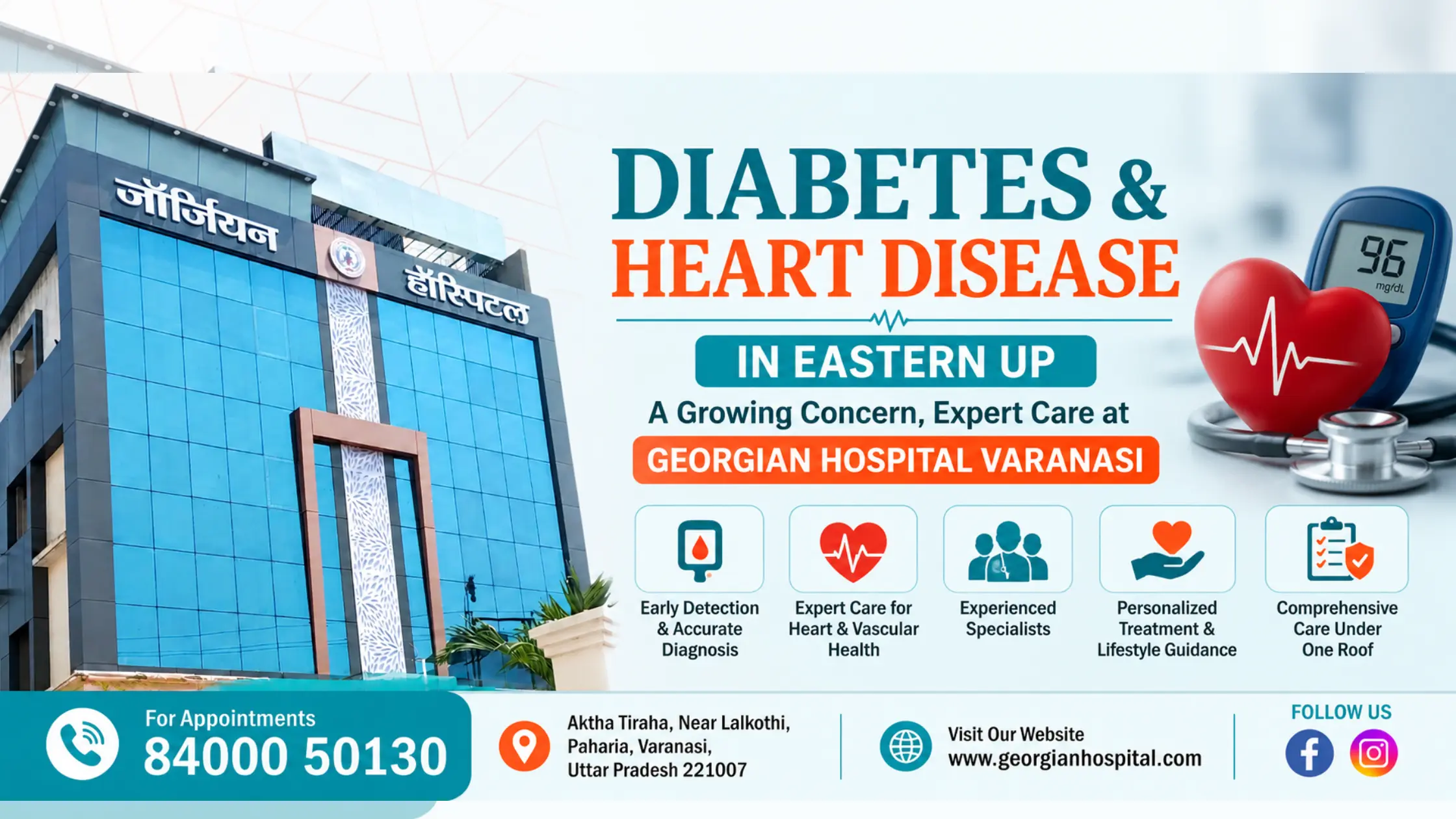
Diabetes and Heart Disease — Twin Threats in Eastern UP
Content reviewed by the medical team at Georgian Hospital, Paharia, Varanasi.
Introduction
Across Varanasi and Eastern Uttar Pradesh, two chronic conditions — diabetes and heart disease — have quietly become among the most common causes of preventable illness and early death. What makes this particularly significant is that the two conditions are not just coincidental companions. They are biologically linked in ways that make each one considerably more dangerous when the other is present.
For millions of families in the region, managing diabetes and heart disease together is a daily reality — often without a full understanding of how one worsens the other. This guide explains the connection, the warning signs to watch for, what prevention looks like in practice, and when medical evaluation becomes essential.
Quick Answer: How Are Diabetes and Heart Disease Connected?
Prolonged high blood sugar gradually damages blood vessels and nerves throughout the body. Over time, this damage accelerates atherosclerosis — the build-up of fatty plaques inside arteries — which increases the risk of heart attack and stroke. People with diabetes also commonly have high blood pressure and abnormal cholesterol levels, compounding cardiovascular risk significantly beyond blood sugar alone.
How Does Diabetes Increase the Risk of Heart Disease?
The relationship between diabetes and cardiovascular disease is well-established in medical research. According to the World Health Organization, adults with diabetes have a significantly higher risk of heart attack and stroke than those without the condition. Understanding how this happens helps people take the right steps to protect themselves.
High Blood Sugar and Blood Vessel Damage
When blood sugar stays elevated over months and years, it causes progressive damage to the inner lining of blood vessels — a process called endothelial dysfunction. This makes vessels less flexible, more prone to inflammation, and more susceptible to the fatty plaque build-up that leads to blocked arteries.
Unlike an injury that heals, this damage accumulates silently. By the time symptoms of heart disease appear, years of vascular injury may already have taken place.
Diabetes and High Blood Pressure
High blood pressure (hypertension) is significantly more common in people with diabetes than in the general population. The American Diabetes Association identifies hypertension as one of the most important cardiovascular risk factors for people with diabetes. Together, high blood sugar and high blood pressure place tremendous stress on the heart and blood vessels — a combination that substantially increases the risk of heart attack, stroke, and kidney disease.
Cholesterol Abnormalities
People with type 2 diabetes frequently have what is called diabetic dyslipidaemia — a pattern of cholesterol abnormalities including elevated triglycerides and low HDL (good cholesterol). Even when total cholesterol appears within a normal range, this pattern accelerates atherosclerosis and cardiovascular risk.
Atherosclerosis and Narrowed Arteries
The combination of high blood sugar, hypertension, and abnormal cholesterol makes atherosclerosis — the hardening and narrowing of arteries — progress faster in people with diabetes than in people without it. When a coronary artery (supplying the heart) becomes significantly narrowed, the result is reduced blood flow to the heart muscle, which can lead to angina or a heart attack.
Increased Risk of Heart Attack and Stroke
People living with diabetes face a meaningfully higher risk of heart attack and stroke compared to the general population. Importantly, they are also more likely to have what are called silent heart attacks — events that cause little or no chest pain, meaning they may go unrecognised and untreated. This is one reason why regular cardiac screening is particularly important for people with diabetes.
Diabetes, Kidney Disease, and the Heart
Diabetic kidney disease (nephropathy) and cardiovascular disease share many of the same risk factors and frequently occur together. Reduced kidney function independently increases cardiovascular risk — creating a triangle of conditions where each worsens the others if left unmanaged.
Warning Signs of Heart Disease in People With Diabetes
Because people with diabetes may experience atypical or less obvious symptoms, it is important to know the full range of signs that warrant medical attention.
Symptoms that require prompt evaluation:
- Chest discomfort, pressure, tightness, or heaviness — even if mild
- Shortness of breath, particularly with exertion or at rest
- Pain or discomfort radiating to the arms, back, neck, jaw, or upper abdomen
- Cold sweating without obvious cause
- Nausea or vomiting alongside other symptoms
- Unusual or unexplained fatigue
- Lightheadedness or dizziness
- Palpitations or an irregular heartbeat
Important: Some people with diabetes experience heart attacks with minimal or no chest pain — this is called a silent myocardial infarction. If you experience any combination of the symptoms above, particularly if you have known diabetes or high blood pressure, seek emergency medical care immediately rather than waiting to see if symptoms pass.
Who Is at Greater Risk?
While all people with diabetes carry elevated cardiovascular risk compared to those without it, certain individuals face a substantially higher risk. A comprehensive cardiovascular risk assessment is especially important if diabetes coexists with any of the following:
- High blood pressure
- Elevated LDL cholesterol or triglycerides, or low HDL cholesterol
- Overweight or obesity
- Tobacco use in any form
- Physical inactivity or sedentary lifestyle
- Family history of heart disease, particularly at an early age
- Existing kidney disease or protein in the urine
- Prior heart attack, stroke, or cardiovascular procedure
- Duration of diabetes greater than 10 years
The presence of multiple risk factors does not mean a heart attack is inevitable — but it does mean that regular medical review and proactive management are essential rather than optional.
How Can People With Diabetes Protect Their Heart?
Prevention of cardiovascular disease in people with diabetes is achievable, and the steps involved benefit both blood sugar control and heart health simultaneously.
- Eat a heart-healthy diet — emphasise vegetables, whole grains, legumes, lean protein, and healthy fats. Limit processed foods, refined carbohydrates, added sugars, and excess salt
- Stay physically active — even 30 minutes of moderate activity (brisk walking) most days of the week improves insulin sensitivity and reduces cardiovascular risk
- Monitor blood glucose and HbA1c regularly — consistent blood sugar tracking helps identify patterns; HbA1c gives a reliable picture of average blood sugar over 2–3 months
- Manage blood pressure — keep it within the target range recommended by your doctor; uncontrolled hypertension significantly accelerates heart disease in people with diabetes
- Monitor cholesterol — get a lipid profile checked at least annually, or more frequently if values are abnormal
- Maintain a healthy weight — even modest weight reduction significantly improves blood sugar control and reduces cardiovascular risk
- Avoid tobacco in all forms — smoking dramatically accelerates atherosclerosis and multiplies cardiovascular risk in people with diabetes
- Get adequate sleep — poor sleep quality is independently linked to worse blood sugar control and elevated cardiovascular risk
- Follow prescribed treatment consistently — do not stop or adjust diabetes or blood pressure medications without discussing with your doctor
- Attend regular health check-ups — annual comprehensive reviews allow early detection of complications before they become serious
Prevention plans should be personalised to each individual’s health status, risk factors, and medications. What works for one person may not be appropriate for another.
Important Tests for Diabetes and Heart Health
Monitoring the right parameters regularly is one of the most effective tools for preventing complications. Key tests include:
| Test | What It Measures | Why It Matters |
| Fasting blood glucose | Blood sugar at baseline | Tracks day-to-day diabetes control |
| HbA1c | Average blood sugar over ~3 months | Best indicator of long-term control |
| Blood pressure measurement | Arterial pressure | Identifies hypertension early |
| Lipid profile | Cholesterol and triglycerides | Assesses atherosclerosis risk |
| Kidney function (creatinine, eGFR) | Kidney health | Identifies early diabetic kidney disease |
| Urine albumin test | Protein in urine | Early marker of kidney and vascular damage |
| ECG | Heart electrical activity | Baseline cardiac screening; detects past events |
Not every patient requires every test at every visit. A qualified healthcare professional will determine the appropriate testing frequency based on individual history, current control, and risk factors.
When Should You See a Doctor?
Arrange a medical consultation for ongoing concerns if you have:
- Diabetes that has been difficult to control despite medication or lifestyle changes
- Consistently elevated blood pressure readings
- Abnormal cholesterol results that have not been followed up
- New or worsening symptoms — fatigue, breathlessness, or swelling in the legs
- A strong family history of heart disease and an existing diabetes diagnosis
- Diabetes for more than 5–10 years without a cardiovascular risk assessment
When Is It a Medical Emergency?
Seek emergency care immediately — do not wait — if you or someone around you experiences:
- Sudden chest pain, pressure, or tightness
- Breathlessness at rest, particularly if it comes on suddenly
- Pain spreading to the arm, jaw, neck, or back
- Sudden confusion, difficulty speaking, or facial drooping
- Loss of consciousness
- Severe sweating with nausea alongside any of the above
These may indicate a heart attack or stroke. In people with diabetes, symptoms can be subtle — err on the side of seeking care immediately rather than waiting for symptoms to intensify.
Georgian Hospital’s 24×7 emergency care services in Varanasi are available at Paharia round the clock for urgent cardiac and medical emergencies.
Diabetes and Heart Health Care at Georgian Hospital, Varanasi
For residents of Varanasi and Eastern Uttar Pradesh seeking medical evaluation for diabetes, blood pressure, cholesterol, or general cardiovascular risk, Georgian Hospital in Paharia offers relevant outpatient and in-patient services.
The hospital’s General Medicine & Diabetology department provides consultation for diabetes management, blood pressure control, and lifestyle disease assessment — the three pillars of preventing diabetes-related heart complications. The Cardiology department at Georgian Hospital offers cardiac diagnostics including ECG, and evaluation for patients with chest symptoms, hypertension, or cardiovascular risk factors.
For patients whose diabetes is coexisting with chest symptoms, an elevated cardiovascular risk, or poorly controlled blood pressure, a joint evaluation by the General Medicine and Cardiology teams allows for coordinated care rather than managing each condition in isolation.
Georgian Hospital also supports cashless treatment for eligible patients through its insurance empanelment network, as well as Ayushman Bharat PM-JAY for qualifying beneficiaries — reducing the financial barrier to regular medical review. For more information about insurance and cashless facilities available at the hospital, see our guide on cashless hospital services in Varanasi.
Georgian Hospital
📍 Akatha Tiraha, Near Lalkothi, Paharia, Varanasi – 221007
📞 +91 84000 50130
🌐 georgianhospital.com
🕐 Emergency: 24×7
Frequently Asked Questions
Q1. Does diabetes increase the risk of heart disease?
Yes, significantly. People with diabetes are at a considerably higher risk of heart attack and stroke compared to those without it. High blood sugar causes progressive blood vessel damage, and diabetes frequently coexists with high blood pressure and abnormal cholesterol — a combination that accelerates atherosclerosis and cardiovascular disease. This is one reason why comprehensive diabetes management includes cardiovascular risk monitoring.
Q2. How does high blood sugar affect the heart?
Prolonged high blood sugar damages the inner lining of blood vessels, making them less flexible and more prone to inflammation and plaque build-up. Over time, this accelerates atherosclerosis — the narrowing of arteries — which reduces blood flow to the heart and increases the risk of heart attack. The damage occurs gradually and silently before symptoms appear.
Q3. Can a person with diabetes have a heart attack without chest pain?
Yes. People with diabetes can experience what are called silent heart attacks — events with minimal or no chest pain, often noticed only through an ECG. This occurs because diabetes can affect the nerves that normally transmit pain signals. Silent heart attacks are more common in people with long-standing diabetes and are a key reason why regular cardiac screening is recommended.
Q4. What are the warning signs of a heart attack in people with diabetes?
Warning signs include chest discomfort or pressure, shortness of breath, pain radiating to the arm, jaw, or back, unexplained fatigue, cold sweating, nausea, and lightheadedness. Because chest pain may be absent or mild in people with diabetes, any unusual combination of these symptoms should prompt immediate emergency medical evaluation rather than watchful waiting.
Q5. How can people with diabetes reduce their risk of heart disease?
Key steps include maintaining blood sugar within the target range (monitored through HbA1c), controlling blood pressure, keeping cholesterol levels in check, eating a heart-healthy diet, staying physically active, avoiding tobacco, maintaining a healthy weight, and attending regular health check-ups. These steps work together — each one managed well reduces the overall risk meaningfully.
Q6. Which tests help monitor heart health in people with diabetes?
Essential tests include HbA1c (blood sugar control), lipid profile (cholesterol), blood pressure measurement, kidney function tests, urine albumin, and an ECG for cardiac baseline. Your doctor will advise on how frequently each test is needed based on your current health status, duration of diabetes, and any existing cardiovascular risk factors.
Q7. How often should people with diabetes get a health check-up?
People with diabetes should ideally have a comprehensive health review at least every six to twelve months — or more frequently if blood sugar, blood pressure, or cholesterol is poorly controlled. Annual checks should include HbA1c, lipid profile, kidney function, and blood pressure. A cardiovascular risk assessment is recommended at least once every year for people with established diabetes.
Q8. Does high blood pressure increase heart disease risk in people with diabetes?
Yes, substantially. High blood pressure and diabetes together place far greater strain on the heart and blood vessels than either condition alone. Together, they dramatically accelerate atherosclerosis, increase the risk of heart attack and stroke, and contribute to kidney disease progression. Controlling blood pressure is one of the highest-priority interventions for reducing cardiovascular risk in people with diabetes.
Q9. Can lifestyle changes alone protect the heart in people with diabetes?
Lifestyle changes are genuinely powerful — regular physical activity, a heart-healthy diet, not smoking, maintaining a healthy weight, and managing stress all significantly reduce cardiovascular risk. However, most people with type 2 diabetes and coexisting cardiovascular risk factors will also need medications to achieve adequate control of blood sugar, blood pressure, and cholesterol. Lifestyle and medication work best together.
Q10. Where can I seek diabetes care in Varanasi?
Georgian Hospital, Paharia, Varanasi, offers outpatient evaluation for diabetes management, blood pressure, cholesterol, and general cardiovascular risk assessment through its General Medicine & Diabetology and Cardiology departments. Appointments can be booked by calling +91 84000 50130 or visiting georgianhospital.com/appointment/. Cashless and Ayushman Bharat facilities are available for eligible patients.
Conclusion
Diabetes and heart disease are two of the most significant health challenges facing Eastern Uttar Pradesh — and their connection makes managing either one in isolation genuinely insufficient. Uncontrolled blood sugar, high blood pressure, and abnormal cholesterol act together to silently damage the cardiovascular system, often before any obvious symptoms appear.
The most important message is also the most actionable one: regular monitoring, early medical evaluation, and consistent lifestyle and medication management can substantially reduce the risk of heart attack and stroke in people with diabetes. Don’t wait for symptoms to prompt a check-up.
Georgian Hospital’s General Medicine, Diabetology, and Cardiology teams in Paharia, Varanasi, are available to support patients at every stage — from initial risk assessment to ongoing management. Call +91 84000 50130 to book your consultation.
Stay Connected with Georgian Hospital
Georgian Hospital regularly shares health awareness content to help families across Varanasi and Eastern UP make informed health decisions — for conditions like diabetes, heart disease, and the lifestyle factors that connect them.
Follow us for expert health tips, preventive care guidance, diabetes and heart health awareness, educational videos, seasonal health alerts, and hospital updates:
📘 Facebook: facebook.com/georgianhospitalvns
📸 Instagram: instagram.com/georgianhospitalvns
▶️ YouTube: youtube.com/@GeorgianHospital
Share this article with a family member or friend managing diabetes — early awareness leads to earlier, better care.
📞 For appointments and enquiries: +91 84000 50130
This article is written for health awareness and educational purposes only. It does not replace professional medical advice, diagnosis, or treatment. All individuals with diabetes should consult a qualified healthcare professional for personalised management plans. Content produced by Core Media IT for Georgian Hospital, Paharia, Varanasi.
References:
- World Health Organization. Diabetes Fact Sheet. who.int
- American Diabetes Association. Cardiovascular Disease and Diabetes. diabetes.org
- American Heart Association. Diabetes and Heart Disease. heart.org
- National Institute for Health and Care Excellence (NICE). Type 2 Diabetes in Adults: Management. nice.org.uk